

The industry of online gambling is at a crossroads. Technology that used to be viewed as an experiment is now the norm, and the growth of the iGaming industry is many times more than anticipated. One of the reports estimates world iGaming revenues at an increase of 78.7 billion dollars by 2024, up to 153.6 billion dollars by 2030. The world is getting stricter in terms of regulation, and any lags or user experiences may prove detrimental. Operators in this competitive market that adopt new technology will have a significant advantage.
What are the iGaming trends to expect in 2026?
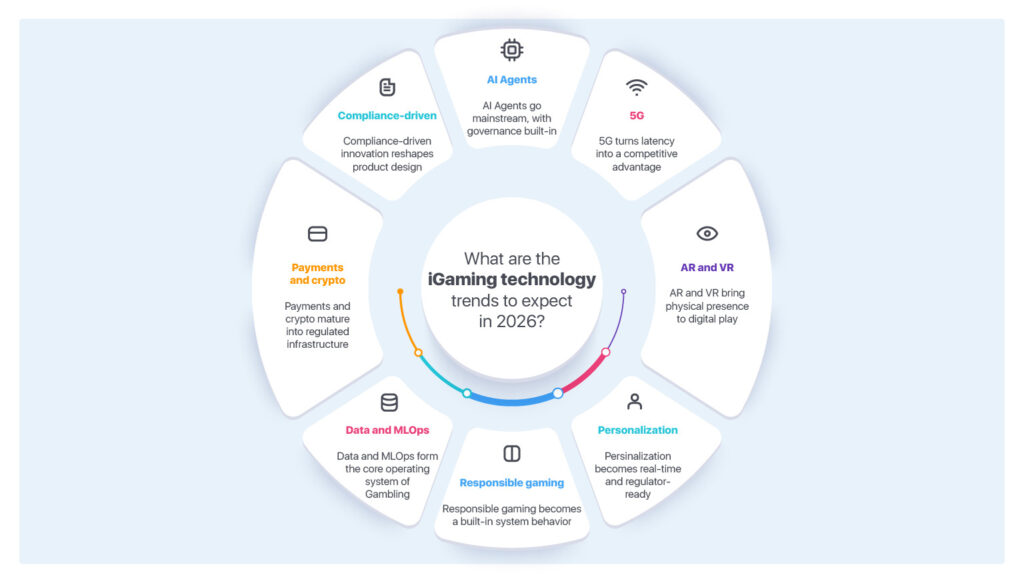
Casino platforms will be built around a number of core iGaming trends in 2026. These include intelligent agents in AI, ultra-personalized user experiences, next-gen connectivity, and compliance. Each of these iGaming trends is significantly impacting the casino industry. Specifically, operators should watch for:
- AI agents;
- Compliant real-time personalization;
- Advantages of 5G low-latency networks;
- Immersive AR/VR gaming;
- Data-centric MLOps platforms;
- Regulated payment/crypto infrastructure;
- Built-in responsible gambling;
- Compliance-first product design.
All of these iGaming trends affect operators in different ways – technically and from a regulatory perspective. Understanding them will help companies stay competitive in 2026.
Compliant real-time personalization
Personalization in iGaming trends has evolved from static suggestions to real-time decisioning. Modern platforms analyze each player’s live session, bet history, and risk profile to tailor offers and games on the fly. Most importantly, these systems now show why a given offer or bonus casino was made, by replaying the logic of the decision. In addition to compliance, real-time personalization is also important in enhancing user experience. Indicatively, in the case of multi-lingual AI assistants such as BetHarmony or BetSymphony, it is possible to:
- Hold a conversation with the user;
- Change the odds;
- Even provide custom no deposit bonus within seconds.
According to industry research, getting personalization right can lift gaming revenues by roughly 10-15%. This iGaming trends shift makes the casino interface highly interactive and responsive. Personalization is no longer a flat menu of choices, but a dynamic engagement layer built on data and compliant algorithms.
AI agents go mainstream with governance baked in
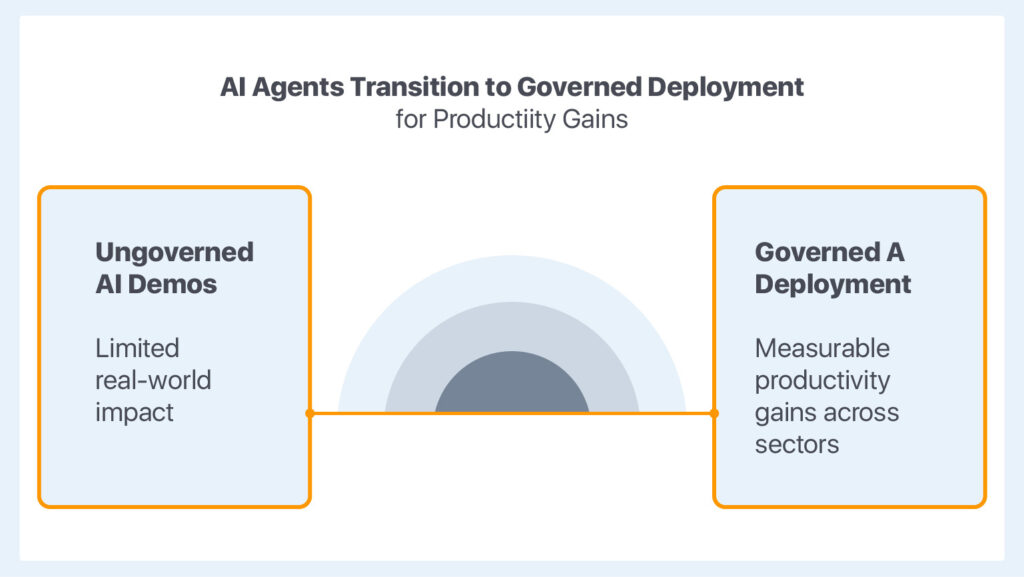
Across industries, AI agents are moving from pilots to production. In the U.S., a recent survey found that 79% of senior executives report already using AI agents, and two-thirds of those see measurable productivity gains. iGaming trends are catching up fast. We’re seeing AI-powered chat agents, fraud-detection bots, and even sportsbook-tuning agents transition into live use. Platforms like BetHarmony already demonstrate how a gambling customer-support agent can coordinate with a payment agent in ai and even inventory or logistics agents, with minimal human intervention.
For casino operators, this means building human-in-the-loop frameworks around every AI. Agents will automate many tasks, but they must operate under strict governance and security controls. By 2026, successful platforms will have AI agents working round-the-clock, with audit trails and trust frameworks built in from the start.
5G turns latency into a competitive advantage
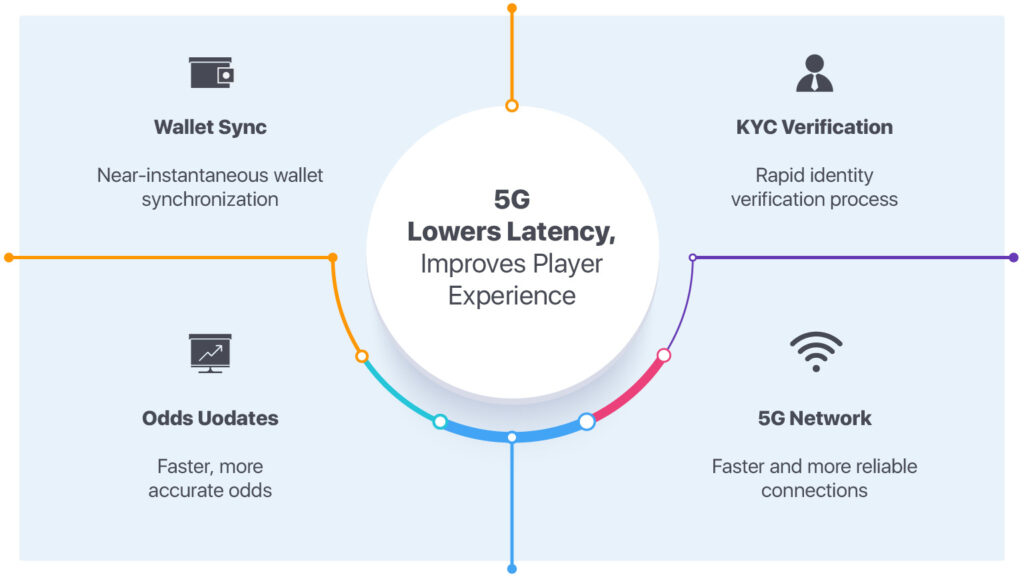
In online betting, where everything moves quickly, speed makes a difference. That’s one reason why 5G is spreading so fast in iGaming. Connections are expected to increase from 1.6 billion in 2024 to about 5.5 billion by 2030. With that, operators are redesigning their systems around tight latency budgets. A GSMA study found the median 5G infrastructure round-trip latency was already about 44 milliseconds in late 2023, low enough to redefine what “real-time“ gaming means. By 2026, casino platforms will target these sub-50ms latencies for core functions. That affects everything from live video feeds to betting updates and payments.
In-play success now depends on speed. By 2026, any lag beyond the 5G norm will hurt user satisfaction. Operators are therefore optimizing network paths, pushing critical services into the network edge, and using 5G’s reliability to ensure that bets, payments, and streams feel instantaneous.
Data and MLOps form the core operating system of iGaming trends
Underlying all of these iGaming trends is data. Casino platforms in 2026 have streaming data pipelines and MLOps in place. This entails collecting every click, every bet, and every session in real-time (using something like Kafka) and making that data available in a central data store. A high-integrity data warehouse or data lake is the source of truth for player and gaming data, and a feature store provides machine learning operations models with new data on demand. This allows AI-driven features such as fraud detection and personalization to operate in real-time.
Strong MLOps is crucial. Models must be continuously validated and tested: automated drift detection, model performance monitoring, and even red-teaming of AI logic are becoming standard practice. Security is integrated both upwards and downwards. Sensitive fields are encrypted or tokenized, and all API calls (particularly those that access payments or personal information) have rigid role-based access controls. Concisely, casinos of the future resemble data platforms more than entertainment platforms. Every person who considers AI without a firm data background will soon be left behind.
AR and VR bring physical presence to digital play
Immersive iGaming trends technology is shifting from novelty to value. Although there was a blip in 2025, where there was a 12% decrease in the shipment of gaming ar vr headsets, IDC predicted an increase of 87% in 2026. The fact that iGaming trends development is already benefiting from this technology is evident. Virtual casinos are being rebuilt as 3D social environments. Gamers can design their avatars, move around the virtual casino, and even join streamed tournaments as if they are there in person.
For the sports-betting arena, there are augmented reality overlays that turn the mobile phone or tablet into a real-time data feed. Just think of the possibility of watching an actual match and tapping the screen to see the live odds or bet directly from the broadcast feed.
While the iGaming trends adoption rate will still be hindered by the price and comfort of headsets, the iGaming trends are obvious. The AR/VR feature is no longer a different communication channel for gamblers. It will be part of the main gambling interface. In the next five years, gamblers will be looking for rich visual information as part of the standard offering in their casino or sportsbook app.
Payments and crypto mature into regulated infrastructure
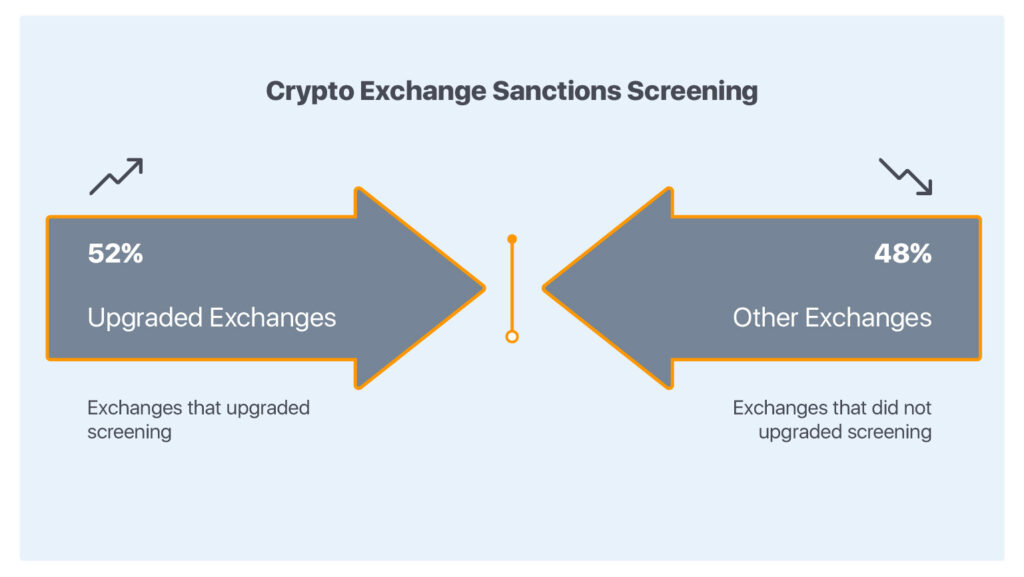
Financial flows in gambling are becoming as much about compliance as convenience. Starting 1 July 2026, the EU’s MiCA framework requires crypto-asset service providers (CASPs) to obtain full regulatory authorization and implement robust transaction controls. In the UK, new Gambling Commission rules (effective 30 June 2026) mandate standardized affordability checks and audit logs at the point of deposit. In practice, this means payments are now part of the compliance stack. Over half of global crypto exchanges (52%) have already embedded sanctions-screening tools into their flows in the past year.
On the fiat side, operators are coding spending limits and self-exclusion into the payment gateways. In 2026, every transaction within a casino app will be fully traceable and risk-rated in real-time:
- Low friction for low risk;
- Instant alert/block for any issues that arise.
The reward: seamless gaming for compliant customers, and instant intervention for those at risk, all fully auditable.
Responsible gaming becomes a built-in system behavior
Responsible gaming is no longer just a promise. It’s an automated system feature. In 2026, operators use data signals (session length, bet frequency, deposit patterns) to detect risky behavior as it happens. When thresholds are crossed, the platform triggers automated interventions, from on-screen warnings to session timeouts or deposit limits. Crucially, each alert is logged with context: why the system flagged the player, and whether the intervention changed anything. This makes compliance verifiable. Behind the scenes, casinos run these safety measures like product experiments, using A/B tests, analytics and user feedback to refine them over time.
Compliance-driven iGaming trends innovation reshapes product design
Regulators are no longer just advising; they are enforcing, and their clock is the only one that matters for iGaming technology trends and product development. For example, the EU AI Act will be in full force by August 2026 and requires auditability, explainability, and management of model risks for AI systems. The implication is that casino game developers must design in transparency from the start of the product development cycle. Every decision made by the algorithms must have a log, and all AI must be explainable to the regulators. By 2026, the only casinos that will win are the ones whose design can prove itself honest and safe.
FAQ: Casino technology trends in 2026
What is real-time personalization in the context of online casinos?
It is the personalization of games and offers in real-time based on the live behavior and profile of the player. Modern technology can change the odds, the user interface, and offer like online casino bonus offers in real-time. It also has an audit trail for the reason behind the decision for compliance purposes.
How do AI agents benefit iGaming trends operations?
AI agents are software robots that perform an operation independently. In the case of iGaming trends, an AI agent automates an operation from start to finish.
How will 5G technology benefit online gambling?
It will provide ultra-fast connectivity. The median latency benefits of 5G technology are approximately 44 ms.
How is responsible gaming implemented in modern casinos?
Operators now bake it into the software. They use data (session time, bet size, deposit patterns) to flag risky play in real time. When an alert is triggered, the system automatically intervenes. Every intervention is logged with reasons and outcomes.