
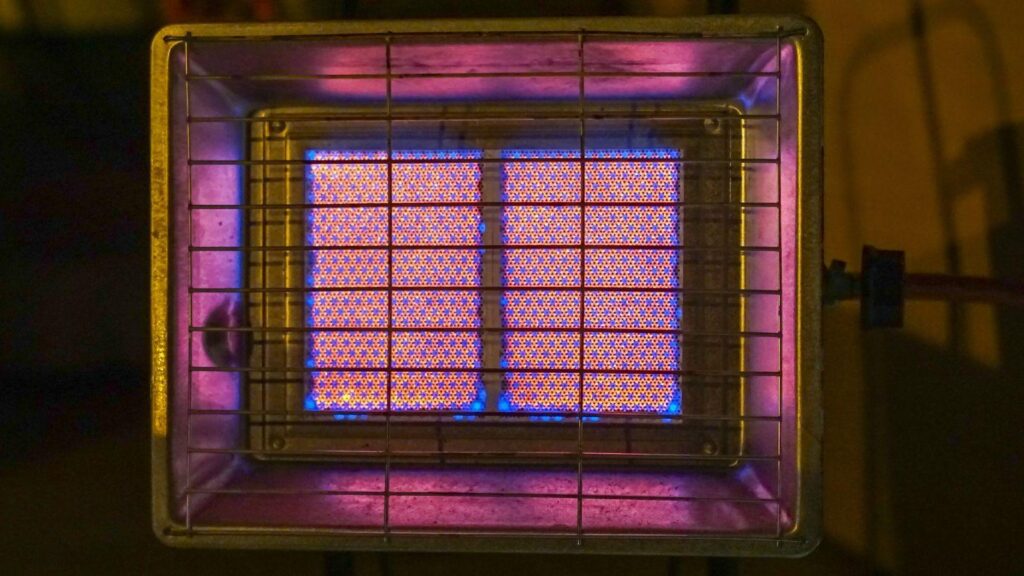
PTC ceramic heaters can be found in all types of consumer electronics today. They are located inside everything from portable space heaters and seat warmers to hair dryers, industrial enclosures, and even incubators.
The outside of a PTC heater is deceptively simple. The smart functionality is built into the internal ceramic material, using what’s known as the positive temperature coefficient effect.
If you’re wondering what a PTC ceramic heater is, you don’t need a degree in physics. You just need to know a few basics. PTC stands for positive temperature coefficient, which means resistance increases as temperature rises. When used in an electric heater, that property allows the element to essentially become its own smart thermostat. It will heat aggressively when cold, then self-regulate as it approaches its designed temperature.
What Is a PTC Ceramic Heater?
PTC ceramic heaters use positive temperature coefficient ceramic material as the heating element. This means that as the PTC ceramic disk or plate gets hotter, its electrical resistance increases sharply at a certain point.
How Does a PTC Ceramic Heater Work?
Let’s break down the working principle of a PTC ceramic heater:
- Turns voltage into heat through resistive heating in ceramic elements.
- Uses PTC effect to increase resistance as temperature increases.
- Automatically self regulates temperature and power draw without complicated feedback controls.
You may also hear manufacturers refer to PTC ceramic heaters as self-regulating heaters. That’s because the heating element itself is able to sense temperature and control its own power draw. As the surrounding environment gets colder and more heat is pulled away from the element, the heater naturally produces more heat. Once it reaches its designed operating temperature, the heater backs off on its own without outside intervention.
Here’s how it works, step by step:
When you apply voltage to the heater element, current flows. As current moves through the element, it begins to heat up. At lower temperatures, the resistance of the ceramic is low, allowing a large amount of current to pass through. That’s why PTC ceramic heaters heat up so quickly.
As the element heats up, something happens to the internal molecular structure of the ceramic. The resistance increases.
With higher resistance, less current flows through the element. This increases the time it takes for the element to heat up further.
The element will continue heating up until it reaches equilibrium. As soon as the heat being generated by the element is equal to the heat being lost to the environment, its temperature will stabilize. If the environment heats up or cooling airflow increases, then heat will begin to dissipate from the element and through this same mechanism, produce more heat.
The exact point at which this happens varies based on what material the ceramic disc or plate is made out of. Different PTC ceramic materials will have different “knee” temperatures. By carefully selecting the right ceramic material and shaping the element into different sizes of discs or plates, manufacturers can design PTC heaters to operate at different approximate temperatures.
It’s because of this ability to self-regulate that some people think of these heaters as having a built in smart thermostat. The element itself takes care of the temperature control on its own.
Advantages of PTC Ceramic Heaters
Why would you want one of these heaters instead of a traditional wire heater? What are the advantages of PTC ceramic heaters? Here are some of the main benefits:
- Safety – Since the resistance increases so dramatically at high temperatures, the heater is protected against overheating. If the element gets too hot, the increased resistance will reduce the amount of current that can flow through it, limiting its power draw. There’s less risk of fire and damage to the heater compared to other designs that rely solely on external controls.
- Automatic Constant Temperature – The heater will naturally regulate itself to maintain a relatively constant temperature. Even if supply voltage fluctuates or airflow increases, the heater will adjust its resistance (and thus current) to maintain a similar target temperature.
- Fast Warm Up – A PTC heater is designed to draw maximum power when it is cold. This means that as soon as you turn the heater on, it produces maximum heat output. PTC heaters can heat up some space pretty quickly.
- Efficiency – In practical applications, this can make PTC heaters more efficient. Unlike traditional heating elements, they won’t continue drawing full power after they reach their target temperature.
- Compact Size & Easy Integration – PTC ceramic elements are small for the amount of heat they put out. They can be integrated into fins, honeycomb structures, flat panels, or flexible formats. PTC ceramic heaters don’t require complex controllers, allowing them to be placed in tighter spaces.
Applications of PTC Ceramic Heaters
You’ll find PTC ceramic heaters in many applications including:
- PTC heaters used in forced air and HVAC applications are typically ceramic fan heaters. Common examples include portable space heaters, cabinet heaters, and duct heaters.
- Car seat warmers, car heating/vent defrosters, and other automotive applications use PTC heaters. They can also be found in some airplanes.
- Consumer appliances use PTC ceramic heaters too. Think hair dryers, curling irons, hand warmers, and small room heaters.
- PTC heaters are often used to keep electronic control cabinets, appliances, and industrial equipment dry and warm. You’ll find them in dehumidifiers and drying ovens. Industrial air heaters are also common applications.
- Medical equipment and scientific laboratory equipment use PTC heaters. This includes incubators, analytical/lab equipment, constant temperature baths, and hospitals under body warming systems.
Limitations of PTC Ceramic Heaters
PTC heaters aren’t ideal for every situation. In fact, what makes them so useful can also limit their use in certain scenarios.
What Makes PTC Ceramic Heaters Special?
A PTC ceramic heater is essentially a small block of ceramic that uses the positive temperature coefficient effect to self-regulate its own temperature. When powered, the element puts out heat almost instantly due to low electrical resistance. As the element reaches its target temperature, the PTC ceramic increases its resistance and stops drawing as much power.
PTC ceramic heaters are everywhere. Once you understand how they work and what they can do, you’ll start noticing them everywhere too.
Real World Example Of PTC Ceramic Heater
To demonstrate PTC heating technology with a real-world example, we will use a heat- up test completed by Xtend Elements which compares the energy consumption of a 2 kW PTC ceramic heating element with traditional spiral heating elements.
During the test, three heating elements were tested in an identical 150-litre Kwikot B- spec geyser. The elements compared were a 2 kW PTC element, a 2 kW conventional spiral element and a 3 kW spiral element. NHS noted that the results of the test showed how much electrical energy was used by each element to heat the water in the geyser tank to the thermostat setting.
The findings are particularly noteworthy.
When comparing the 2 kW PTC element to the 3 kW spiral element, the PTC element used 31% less energy and took the same time to reach the set temperature on the thermostat. When compared to the conventional 2 kW spiral element, the PTC element used 34% less energy to achieve the same measured heating result.
This test was beneficial because it looked at how PTC heating technology behaves differently from conventional resistive heating elements in the real world. Rather than just comparing wattages between the elements, it examined how much energy was required to achieve a certain heating result.
While this is just one example, and the results should not be taken to mean that all PTC heaters will use less energy than all traditional heaters, it does highlight one reason why PTC ceramic heating elements are used in so many applications. Their controlled heat output, self-regulation, and energy consumption can make them ideal for many heater designs.
https://xtendelements.co.za/heat-up-test/
PTC Ceramic Heater FAQs
What does PTC stand for in a heater?
PTC stands for Positive Temperature Coefficient. It is a term used to describe a material that gets harder to electrolyze as its temperature increases. In a PTC ceramic heater, as the element gets hotter its electrical resistance increases, which causes the heater to naturally draw less current and produce less power.
How does a PTC ceramic heater work?
A PTC ceramic heater produces heat through electrical resistance. When electricity flows through the element it is converted to heat. A PTC ceramic heater has the special property of reducing its power output as it heats up. When the element is cool its resistance is low and allows a large amount of current to flow. This produces a high initial heat output. As the element heats up, the resistance increases and less current flows through the element. This reduces the power output of the heater.
Are PTC ceramic heaters self-regulating?
Yes. Self-regulating is another way of saying the heater reduces its power output as it gets hotter. For PTC ceramic heaters, this occurs because of the temperature coefficient of the ceramic material.
Are PTC heaters energy efficient?
PTC heaters have the ability to reduce their energy consumption as they get hotter. However, we would not say that all PTC heaters are more energy efficient than all other heaters. Each heater’s efficiency will depend on its design and how it is used.
Do PTC heaters need a thermostat?
Since the PTC element can self regulate its power output there is no need for external controls to provide basic temperature regulation. However, PTC heaters can still use thermostats, temperature sensors, thermal fuses and other controls or safety features.
Are PTC ceramic heaters safe?
As with any heating device, safe operation is dependent on the complete design of the heater, not just the heating element. That being said, PTC elements do have a natural temperature limiting effect thanks to their PTC characteristics.
How quickly does a PTC heater heat up?
PTC heaters heat up almost immediately because they have low electrical resistance when they are turned on. Because there is little resistance when the element is cold, more current flows through the element which increases power output and heat production.
What are PTC heating elements used for?
PTC heating elements are used in a variety of applications. This includes general purpose heaters, HVAC systems, duct heaters, automotive applications, electronic control cabinet heating, dehumidifiers, hair dryers, industrial heaters and laboratory equipment.
What is the difference between a PTC heater and a conventional heating element?
PTC heaters have what is known as a positive temperature coefficient. As their temperature increases, their resistance increases which reduces the amount of current flowing through the element. A conventional heating element will have little change in resistance as its temperature changes.
Can PTC heaters overheat?
Due to the nature of PTC ceramic elements, they limit their own power output as their temperature increases. While this can help prevent overheating, other factors could still cause the entire heater to overheat. A heating system should always be designed with fail-safe procedures in mind.
Can PTC heaters be used for HVAC systems?
PTC heaters are very commonly used in HVAC systems. They can be used with fans and heat-transfer fins to blow hot air.
Where are PTC ceramic heaters commonly used?
PTC heaters are used in a variety of applications and products. You can find them in homes, commercial buildings, vehicles, and industrial equipment. Common applications include air heaters, forced-air fan heaters, automotive or truck cabin heaters, appliance heaters, process heating, incubators, electronic equipment and more.
What makes PTC ceramic heaters different?
PTC heaters can produce a large amount of heat right when they are turned on. As they reach their desired temperature, the heater will begin to reduce its power output.