
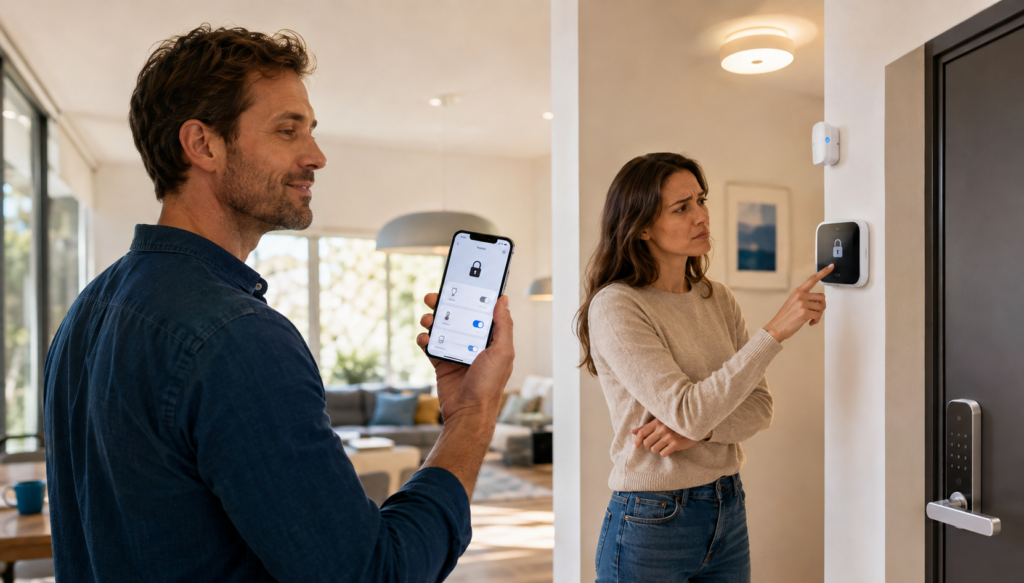
A smart home promises comfort through small acts of automation. The heating responds before a room feels cold, a door unlocks without a key, and lights follow an evening schedule. Yet every convenient command also raises a less visible question: who has the authority to issue it?
The answer is often determined during setup, when one person creates the main account and invites everyone else. That administrative shortcut can produce an uneven household. One resident gains permanent control over settings, records, permissions, and connected accounts, while others receive access that can be changed or withdrawn at any moment.
One Home, Several Levels of Authority
Physical household equipment traditionally has clear controls. Anyone in the room can adjust a manual thermostat or operate a light switch. Connected equipment adds an account hierarchy between the resident and the appliance.
Manufacturers use different names for their permission levels, but most systems distinguish between an owner, an administrator, a member, and a guest. These labels may sound technical, although they decide who can view camera recordings, create door codes, change routines, or remove another person.
|
Access level |
Typical permissions |
Main limitation |
|
Owner |
Manages accounts, devices, subscriptions and stored data |
Usually only one primary owner |
|
Administrator |
Changes settings and invites other members |
May not transfer ownership |
|
Household member |
Operates approved devices and routines |
Limited control over records and permissions |
|
Guest |
Uses selected locks or appliances temporarily |
Access can expire or be cancelled |
The hierarchy is useful when permissions reflect genuine household needs. Problems emerge when the account structure silently turns one resident into the digital landlord of a shared home.
Convenience Can Hide Unequal Control
Smart-home control rarely looks dramatic at first. It may begin with one person handling installation because that person bought the equipment or understands the app. Over time, more devices join the account, and the original administrator becomes the gatekeeper for heating, lighting, locks, speakers, cameras, and electricity data.
Similar permission structures appear in other account-based services. At Merhabet casino, a registered account connects the player’s balance, stake limits, game history and payment verification. Clear authentication ensures that a deposit, bet, withdrawal or bonus is processed only for the authorised account holder.
A household system is more complicated because several people may have legitimate claims to the equipment. Ownership of the account does not necessarily match ownership of the home, payment of the bills, or everyday reliance on a device.
What Digital Control Looks Like
Control does not require someone to switch every appliance off. Small interventions can be difficult to recognise because they resemble faults, forgotten settings, or failed automations.
They may include:
- changing the thermostat remotely;
- disabling a personal door code;
- monitoring arrivals through a video doorbell;
- receiving alerts whenever a particular lock opens;
- interrupting sleep through connected lights or speakers;
- checking energy data to infer when someone is home;
- removing a resident from the household account;
- changing routines without informing other users.
Individually, these actions may have ordinary explanations. A repeated pattern, combined with exclusive control of the administrator account, reveals a problem with authority rather than automation.
The National Network to End Domestic Violence treats technology misuse as a matter involving privacy, accessibility and civil rights. Its Safety Net Project also works with technology companies and community organisations to improve the way connected products respond to such risks.
Shared Devices Need Shared Governance
Many smart-home apps were designed around a single-account model inherited from personal electronics. That approach works reasonably well for headphones or a fitness tracker. It fits a shared front door, thermostat or security system much less comfortably.
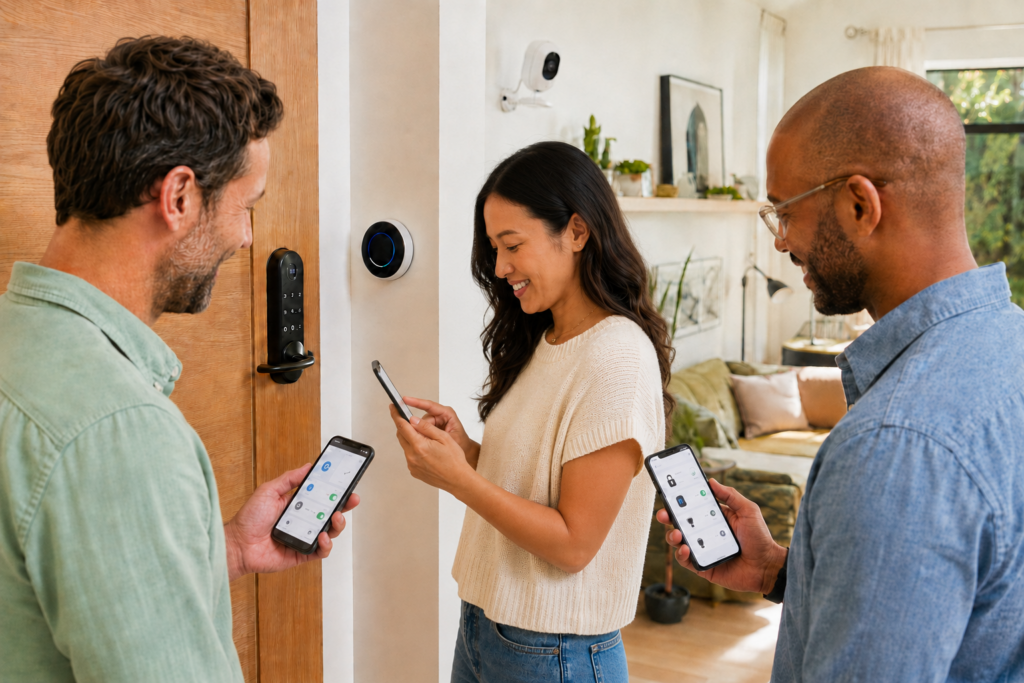
A fairer design would treat essential household equipment differently from personal gadgets. Every established resident could receive independent credentials, while significant changes would require notification or confirmation. Removing access to a lock, camera or heating system should leave a visible record rather than happening silently.
Useful safeguards include:
- separate logins instead of a shared password;
- role-based permissions for individual devices;
- alerts when an administrator changes access;
- an accessible history of account and settings changes;
- recovery options that do not depend on one person’s phone;
- a documented process for transferring ownership.
These controls would not prevent legitimate administration. They would make authority visible and reduce the possibility that a technical privilege could be exercised without accountability.
Security Advice Covers Only Part of the Problem
Standard cybersecurity guidance remains important. The US Federal Trade Commission recommends replacing default credentials and enabling two-factor authentication for connected devices. NIST also advises households to review privacy settings, install updates and separate smart equipment from computers holding sensitive information.
Those measures protect a home against outsiders. They do not resolve a dispute in which the person exercising unwanted control already has valid administrator credentials. Security asks whether a command came from an approved account. Household governance asks whether that account should possess sole authority over the device in question.
Moving House Exposes Another Weak Point
Account ownership can also become unclear when a property is sold, rented or vacated. Devices fixed to the building may remain connected to the previous resident’s cloud account even after physical keys have changed hands.
The FTC recommends removing administrative access and personal information, cancelling or changing account settings, and restoring connected equipment to factory settings during a sale. A proper handover should also identify every installed hub, sensor, lock and subscription. Otherwise, a new resident may inherit equipment that cannot be fully controlled, while the previous administrator retains data or remote access.
A Smarter Definition of Ownership
Connected homes need a broader understanding of ownership. Buying a device, installing its app and creating the first account should not grant unlimited authority over everyone who depends on it.
The strongest systems will recognise several legitimate users, record important changes and provide clear routes for separating accounts. Locks, heating and household monitoring deserve particularly careful treatment because their operation affects physical space, not merely an online profile. Smart technology becomes genuinely useful when convenience is supported by transparent permissions.