
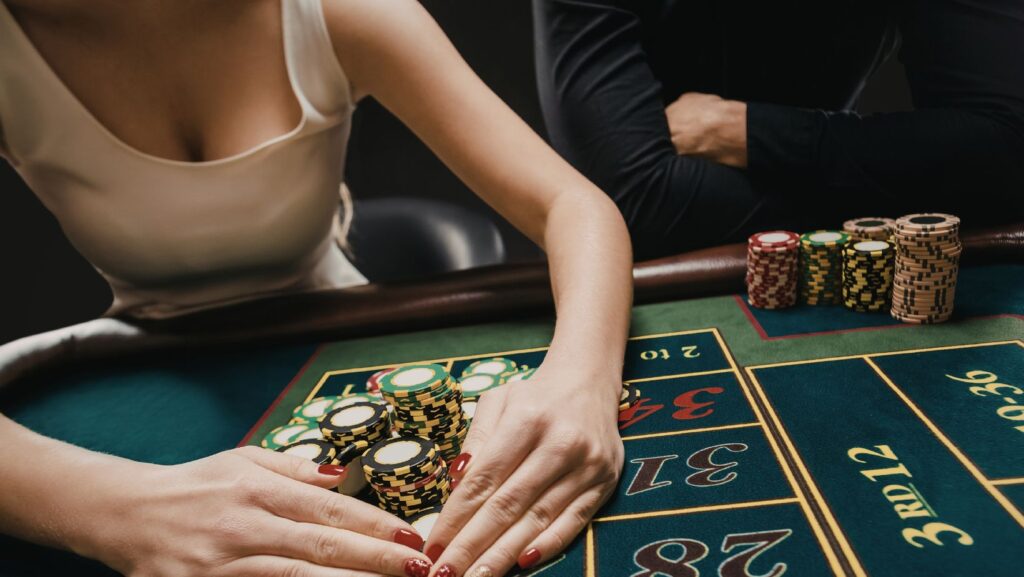
I’ve placed thousands of bets across slots, table games, and sports betting. Won some, lost plenty. But the smartest bets I’ve made? The ones I didn’t place.
There are three specific situations where I refuse to gamble, regardless of how tempting the opportunity looks. These aren’t about odds or strategy—they’re about recognizing when the game is rigged against you before money hits the table.
Platform structure influences these decisions. Lucky Circus enforces 30 AUD minimums across four-deposit welcome packages—forcing deliberate choices where you play pokies online with smaller, controlled amounts rather than single massive balances.
Situation #1: When I’m Winning Big
Sounds backwards, right? You’re up $300, feeling sharp, reading the game perfectly. This is exactly when you should keep going.
Wrong.
Big winning streaks create a dangerous illusion. You start believing you’ve figured something out. That you’re “running hot” or have some edge. Your confidence spikes, bet sizes creep up, and you start taking risks you’d never consider normally.
I learned this during a blackjack session where I turned $100 into $380 in 45 minutes. Everything was hitting. Bumped my bet from $10 to $25, then $50. Lost six hands straight and walked away with $90.
The trap? Winning streaks are statistical noise, not skill. They end abruptly. Your inflated bet sizes accelerate the crash.
I now have a hard rule. When I double my starting bankroll, I cash out 75% immediately. The remaining 25% is play money with my original bet sizes restored.
During my last big streak (up $420 on slots), this rule saved me. I cashed out $315, played with $105, and lost it all within 20 minutes. But I still walked away up $315 instead of broke.

Quick reality check: Track how long your winning streaks last versus how fast they evaporate. Mine averaged 40 minutes up, 12 minutes down. The math doesn’t care about momentum.
Situation #2: After Any Alcohol
Even one drink changes the math. I’m not talking about getting drunk. I mean any alcohol in your system while gambling.
The effects are subtle but measurable. After one beer, my bet sizing discipline falls apart. I tested this deliberately (for science). Sober sessions: average bet stayed within 15% of my starting bet. One-beer sessions: average bet drifted 40% higher by minute 30.
One drink doesn’t make you sloppy. It makes you optimistic. Risk feels less risky. Bad bets look reasonable. That voice saying “maybe slow down” gets quieter.
I watched this destroy a guy at a roulette table in Vegas. Started with $20 bets and a whiskey. Three drinks later, he was betting $200 on single numbers. The alcohol didn’t make him stupid. It made him believe his luck was better than mathematics.
My current policy: zero alcohol during gambling sessions, zero gambling during drinking sessions. They’re separate activities. The casino offering free drinks isn’t generosity—it’s a business strategy with decades of profit data behind it.
Situation #3: When I’m Chasing Specific Amounts
The moment you need a specific dollar amount from gambling, you’ve already lost. Need-based gambling transforms risk assessment into wishful thinking. You’re no longer evaluating odds. You’re negotiating with the universe.
I’ve been there. Needed $180 for a car payment. Had $50 in my account and $100 in casino balance. Figured I’d just grind it out on low-volatility slots. Four hours later, I had $0 in casino balance and still needed $180.
The problem isn’t hope. It’s that specific targets create invisible pressure. You make bets you wouldn’t normally make because you need them to win, not because they’re smart plays. When you hit $170 and need $10 more, you don’t stop. You push for the exact number and usually lose everything.
I now treat gambling money as entertainment budget, completely separate from bills or necessities. If I somehow need money for an expense, gambling is the last place I’d look. That mental separation has saved me from countless desperate sessions.
Payment timing reinforces mental separation. Using siirto talletus casino where bank transfers require 3-5 days creates natural barriers—withdrawn gambling funds become inaccessible for immediate needs, preventing the “I’ll just win back rent money” desperation spiral.
Warning: The “I’ll just win back what I lost today” mindset is the same trap. You’re chasing a number, not making decisions. Same outcome every time.
Why These Three Matter Most
These situations compromise judgment before you even place a bet. You’re not fighting the house edge anymore. You’re fighting your own psychology with the house edge stacked on top.
Walking away from these situations isn’t overthinking. It’s recognizing that some battles are lost before they begin. The best gambling decision isn’t about when to bet—it’s knowing when the smartest play is not betting at all.
I’ve saved more money by recognizing these three situations than I’ve won through any strategy or system. The house edge will grind you down eventually. But at least start from a position where your brain isn’t working against you too.