
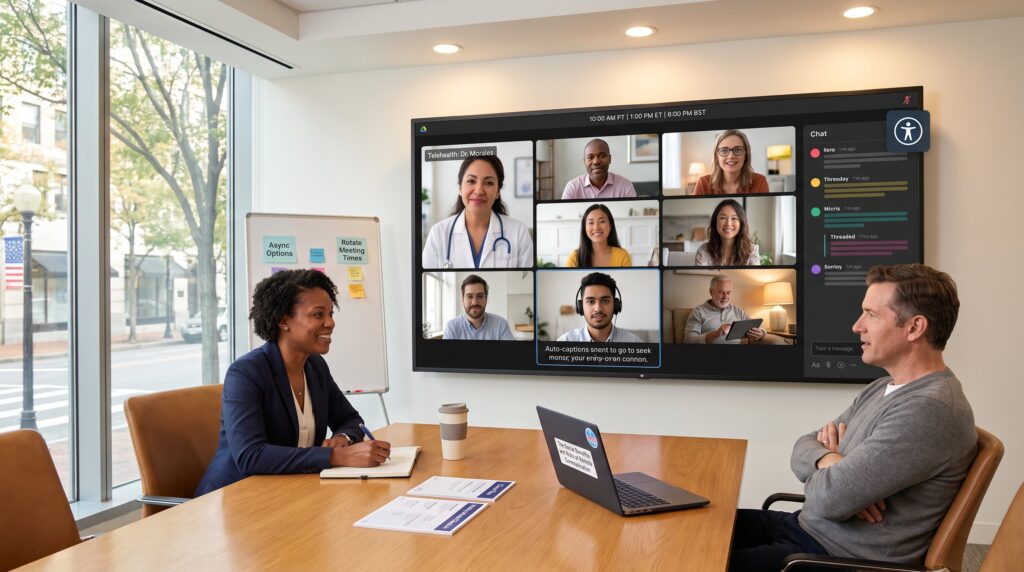
Remote communication still shapes how people work, learn, and keep relationships across cities and time zones. The Social Benefits and Risks of Remote Communication appear in daily routines: video calls replace lunchroom chats, messaging threads carry project context, and telehealth visits bridge miles. This article explains why remote communication matters in 2026, where it helps social connection and inclusion, the measurable downsides that erode trust and wellbeing, and practical steps organizations and individuals can take to stay connected, and safe.
Key Takeaways
- Remote communication remains essential in 2026 for maintaining work, education, and healthcare continuity across distances and disruptions.
- The social benefits of remote communication include increased accessibility, inclusion, and flexibility, enabling broader participation regardless of location or mobility.
- Remote communication risks include isolation, miscommunication, trust erosion, and blurred work-life boundaries, which can harm wellbeing and team cohesion.
- Organizations and individuals should prioritize high-value interactions using video or phone, establish predictable social rituals, and set clear boundaries to maximize benefits and reduce risks.
- Designing remote communication for inclusion requires features like automatic captions, asynchronous options, and rotating meeting times to support diverse needs.
- Building trust in remote teams involves encouraging camera use in small groups, respecting privacy, training managers in active listening, and using secure, well-integrated technology platforms.
Why Remote Communication Still Matters Today
Remote communication matters because it preserves functioning across distance and disruption. It enables teams to keep shipping products when offices close, classrooms to continue during emergencies, and clinicians to treat patients without travel. In 2026, hybrid schedules mean some workers share a physical office while others join from five time zones away: remote channels make that possible.
Concrete impacts are visible: companies report fewer same-day sick leaves when telework is available, universities maintain enrollment by offering synchronous online lectures, and rural clinics expand access with telehealth sessions. Remote tools also scale collaboration: a distributed design team can iterate with real-time whiteboards and asynchronous comments, shortening the feedback loop from days to hours.
But, the persistence of these benefits depends on deliberate design: platforms, policies, and habits must align to preserve social ties. Technology alone does not create cohesion, people do. That distinction explains why the following sections focus as much on social practice as on software.
Social Benefits Of Remote Communication
Remote communication increases social reach and practical inclusion. It expands who can participate in work, education, and civic life by removing geographic and mobility barriers. For example, an applicant with limited mobility can interview from home and join panel meetings without commuting, increasing actual hiring opportunities.
Teams that invest in high-quality remote interaction report sustained relationships. When organizations schedule deliberate social time, virtual coffee, structured peer mentoring, or rotational show-and-tell, colleagues maintain rapport and receive timely feedback. A small design firm noted that weekly informal check-ins cut project rework by 18% because team members surfaced misaligned assumptions earlier.
Remote channels also offer flexibility. Caregivers can shift hours around school pickups while remaining engaged in meetings: students can access recorded lectures after overnight work shifts. If tools adopt inclusive defaults, captioning, screen-reader compatibility, and varied time options, remote work becomes a multiplier for diversity, equity, and inclusion rather than a barrier.
Greater Accessibility, Inclusion, And Flexibility
Remote communication directly improves accessibility for specific groups. People with chronic illness or mobility limits can attend meetings without travel, saving commute time and physical strain. For example, a telework accommodation that cuts commute time by 90 minutes a day can translate into two extra hours for focused work or recovery.
Inclusion grows when platforms reduce friction: automatic captions help non-native speakers, asynchronous threads let neurodivergent staff contribute at their pace, and flexible scheduling supports caregivers. Still, these gains require conscious choices: default-on accessibility features, clear asynchronous norms, and measured expectations about availability. Without those, flexibility becomes unpredictability, and inclusion falters.
Social Risks And Downsides Of Remote Communication
Remote communication brings measurable social costs. Isolation, miscommunication, and trust erosion appear when informal interaction and high-bandwidth signals disappear.
Isolation shows up as fewer spontaneous conversations that normally resolve friction and spark ideas. Creative breakthroughs often come from hallway chats: when those vanish, teams report a decline in novel cross-pollination. Emotional strain follows: employees working fully remote can experience loneliness and decreased belonging, especially when organizational rituals favor in-person participants.
Miscommunication increases in text-heavy channels. Short messages lack tone, and threads fragment context. A misread chat about deadlines can cascade into missed deliverables and frustration. Over time, repeated small misunderstandings reduce confidence in colleagues’ reliability.
Trust erosion happens when quality of interaction drops. Trust depends on regular, rich contact, shared rituals, eye contact, and spontaneous empathy. When remote channels prioritize task updates over relational signals, team cohesiveness declines. Marginalized staff feel this acutely: without informal sponsorship, they miss the subtle career cues and advocacy that often happen off-channel.
Blurring boundaries compounds these risks. An “always online” culture raises stress and means people miss meaningful downtime, which damages social energy at home and work. Women and caregivers report disproportionate pressure, as flexible schedules translate into fragmented attention rather than true autonomy.
Practical Strategies To Maximize Benefits And Mitigate Risks
Prioritize the highest-value interactions first. Use video or phone for nuanced conversations, performance reviews, conflict resolution, and mentoring, while keeping routine updates in messaging tools. Video preserves facial cues and reduces misinterpretation: audio suffices when bandwidth or accessibility is limited.
Adopt predictable social rituals. Schedule short weekly social check-ins and monthly cross-team demos so informal interaction becomes intentional. One nonprofit found that 15-minute weekly “stand-down” chats where people shared nonwork wins increased team retention by 6% over a year.
Set clear boundaries and expectations. Define core collaboration hours and signalable focus time so people can block deep work without guilt. Encourage explicit status updates (e.g., “offline for school pickup until 3pm”) rather than silent assumptions. Organizations should pair policies with mental-health resources and monitor workload to prevent burnout.
Design for inclusion. Enable automatic captions, provide asynchronous options for input, and rotate meeting times when teams span time zones. Track participation data to spot who rarely speaks and create low-risk avenues for contribution, such as written idea boards or anonymous prompts.
Build norms that support trust. Encourage camera-on for small-group conversations but respect privacy: allow virtual backgrounds and limited camera-off breaks. Train managers in remote listening skills: ask open questions, summarize what they heard, and follow up in writing when action items matter.
Operational tools and security matter too. Use a vetted stack for remote work to avoid friction and risk. For secure connectivity and policy guidance, teams often reference best practices for vpns to protect sensitive conversations. When remote desktop or access tools are needed, review documented trade-offs in remote desktop access. Integrate platform choices with organizational norms so technology supports, rather than erodes, social connection.
For broader context on how these habits fit into technology’s role in daily life, practitioners can examine research on technology’s impact to align policy with social goals. Teams concerned about algorithmic influence on attention can pair these practices with insights from recommendation systems. Finally, ensure privacy protections by consulting a practical privacy guide as part of onboarding.
Conclusion
Remote communication delivers accessibility, flexibility, and new forms of connection, but only when people design interactions intentionally. They must balance high-quality synchronous contact with inclusive asynchronous practices, protect boundaries, and invest in tools and norms that preserve trust. With deliberate choices, remote channels can expand social access while avoiding the loneliness and miscommunication that otherwise follow.