
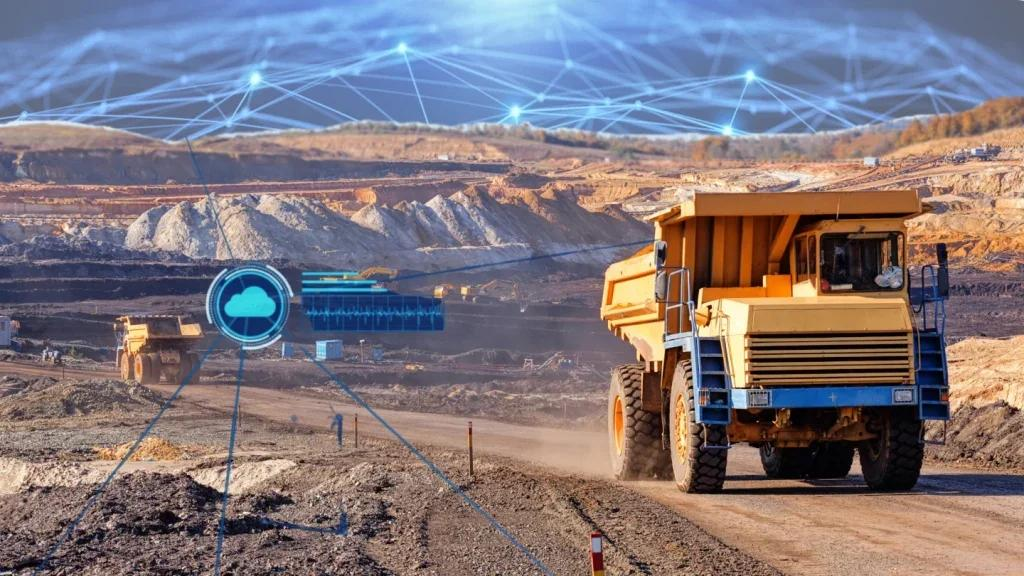
The Digital Awakening of Resource Extraction
Nowadays, when you step into a deep underground extraction facility, it feels way more like walking into an air-conditioned software engineering lab than an actual pit in the ground. Massive fiber-optic cables run down the shaft walls, feeding live gigabytes of raw sensor data straight into central servers. Why did everything change so fast? Simple. Old methods just cannot keep up with how fast the world burns through raw resources today.
Running these massive industrial sites costs an absolute fortune every single morning. Between buying replacement diesel engine parts, paying hundreds of specialized technicians, and powering massive air vents, site directors constantly worry about where their capital is vanishing. Heavy machinery eats through immense amounts of fuel non-stop. Because of that brutal reality, finance teams tasked with long-term budget planning always double-check an up-to-date coal price forecast before signing off on expensive hardware upgrades. If energy prices swing the wrong way mid-year, entire equipment purchase plans can collapse in an instant.
Surging Demands Meets Hard Industry Data
Global factories, battery makers, and urban power networks want raw materials right now, and they want them cheap. Building electric cars, wind farms, and high-speed rail lines requires insane quantities of copper, nickel, cobalt, and iron. Look at the numbers published by the International Energy Agency (IEA) – they calculated that overall global demand for critical industrial minerals could easily quadruple by 2040 as clean energy transitions gain traction. How do site managers hit those numbers without blowing up their operational budgets? By ditching manual paper logs and letting digital networks handle the heavy lifting.
Guesswork is dead. In the past, if a rock drill hit an unexpected hard pocket, crew leaders just crossed their fingers and pushed the engine harder until something snapped. That approach was messy, slow, and stupidly expensive. Today, digital tools give operators exact physical telemetry down to the millimeter before anyone even turns an ignition key. Staying competitive nowadays isn’t about bragging about how much dirt your crew moved yesterday. It is purely about surviving in a merciless global market where one bad week of equipment downtime can bankrupt an entire quarter.
Huge Trucks, Zero Drivers
Picture a giant haul truck. We are talking about a machine as tall as a two-story house, weighing well over 400 tons when fully loaded with jagged granite. Now imagine watching that monster roll up a steep, winding gravel road in complete darkness without anyone sitting inside the cab. Sounds crazy? Well, it happens every single day now across massive open pits in Western Australia and South America. Autonomous Haulage Systems, or AHS for short, use satellite GPS, rotating LiDAR beams, and radar arrays to steer these giant vehicles across dangerous terrain without human intervention.
Human exhaustion has always been the single scariest hazard on remote sites. Ask anyone who ever worked a brutal twelve-hour graveyard shift underground – your eyes get heavy, your focus drifts, and bad mistakes happen fast. Robotic trucks never get tired. They don’t blink, they don’t take phone calls, and they follow assigned driving paths down to the millimeter. A detailed field study by McKinsey & Company pointed out that switching to autonomous haulage fleets can raise overall site productivity by up to 30% while knocking diesel consumption down by nearly 10%. That saves huge amounts of cash over a full operational year.
And safety? The improvement is huge.
Letting Algorithms Catch Faults Early
When a primary ore crusher jams or a main haul conveyor belt snaps unexpectedly, the entire operation grinds to a halt. Every single minute that machinery sits idle, site owners burn money while haul trucks queue up helplessly. That is precisely why artificial intelligence and predictive diagnostics are rapidly replacing traditional repair schedules across major industrial facilities.
Engineers now slap tiny, low-power wireless sensors across every motor, pump, and hydraulic line on site. These sensors listen to microscopic vibration patterns, track heat spikes, and record subtle pitch changes during operation. Smart machine-learning models study what healthy equipment sounds like during normal shifts. The exact second a steel bearing starts developing micro-cracks inside a dark casing – weeks before a human mechanic could ever spot it – the software triggers a repair ticket.
Research published by the World Economic Forum confirms that adopting predictive digital maintenance networks slashes unplanned equipment downtime by roughly 20%. Instead of waiting around for catastrophic engine blowouts underground, mechanics swap out worn parts during short, calm, pre-planned maintenance windows. It stops massive headaches before they even start.
Virtual Maps and Flying Sensors
Knowing what lies buried beneath hundreds of feet of solid rock used to involve lots of expensive test drilling and hopeful guessing. Now, technical teams build live digital twins. A digital twin is basically a real-time, 3D computer clone of the entire physical site. Engineers feed continuous survey data straight into these virtual maps, allowing them to test complex excavation plans on screen before sending heavy excavators out into the dirt.
Drones do plenty of heavy lifting here too. Automated survey drones take off every morning, flying pre-set aerial loops over the entire facility. They map changing ground levels, measure the exact volume of ore stockpiles, and spot tiny rockwall cracks before dangerous landslides can happen. On top of that, smart moisture sensors embedded along haul roads keep dust suppression trucks from wasting water. Thanks to these tightly managed closed-loop systems, many modern facilities now recycle upwards of 80% of all process water used on site.
Going Electric Down Below
Deep underground shafts have a massive ventilation problem. Old diesel loaders spew clouds of hot, dirty exhaust into tight tunnels, forcing site managers to spend millions on huge ventilation fans just to keep the air breathable. Replacing those old diesel monsters with battery-electric loaders changes the game entirely.
Electric equipment runs cool, produces zero direct exhaust, and makes way less noise. Workers underground can actually hear each other talk without screaming over engine roar. Fast-charging bays built into rock walls let electric loaders top off their battery packs while operators take short lunch breaks. Air quality stays clean, and ventilation power bills drop drastically.
Real Risks, Heavy Investment, and No Free Passes
Upgrading a traditional heavy industrial facility into a modern automated digital network sounds incredible on paper, but it takes serious capital, tons of patience, and relentless risk management. Technology fixes a lot of operational bottlenecks, yet it definitely isn’t a magical wand that guarantees instant success or endless profits.
Operational Risk Disclaimer: Everyone in heavy industry needs to remember that raw material markets are wildly unpredictable. Geopolitical tensions, sudden currency shifts, and unexpected global recessions can hit project revenues hard. Installing autonomous haul fleets or AI diagnostic networks streamlines daily operations, but it does not guarantee profits or protect businesses against broader economic crashes. No technology system on earth can offer guaranteed financial returns or eliminate standard commercial risk.
Also, going fully digital opens up new vulnerabilities. Hackers targeting industrial control systems could lock up an automated haul fleet or disable safety sensors with a few keystrokes. That means companies must invest heavily in military-grade cybersecurity alongside physical hardware to keep their remote sites running safely.
Navigating the Road Ahead
The shift toward automated, data-driven extraction is changing how raw minerals are pulled from the earth today. From driverless haul trucks and predictive AI diagnostics to electric underground loaders and real-time drone surveys, modern technology turns dangerous, chaotic sites into smart, tightly controlled networks. When site managers combine these powerful digital tools with realistic risk planning, they build safer, cleaner operations that are ready for whatever the global economy throws at them next.