
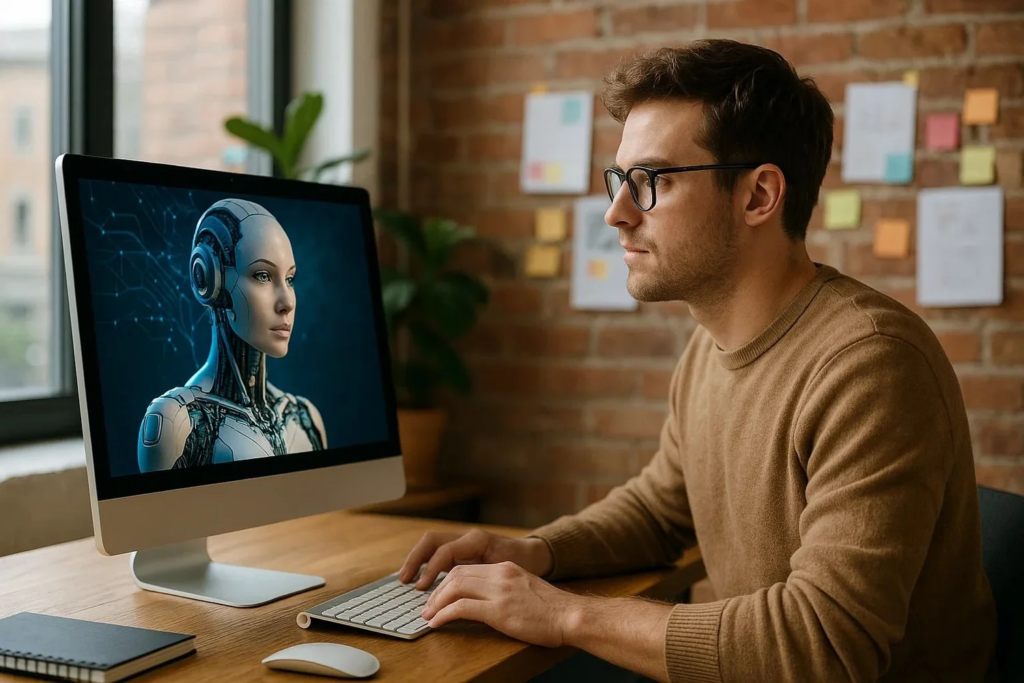
Generative AI is exploding in the creative industry, but it’s not the doomsday scenario most believe it is.
If you’ve spent any copious amounts of time on the internet in the last three or so years, you’ve no doubt seen or likely been affected by AI dread. The dread of life being drastically different because of AI advancement, and not always for the better.
Usually, AI dialogue goes straight to the doomsday scenario — the ones populated by old movies like The Terminator, iRobot, or Blade Runner. Most popularize the idea of AI being all-powerful machines that become self-reliant, at the expense of humans. And you know the rest of the story: end of times and machines as our masters.
Blah blah blah. Look, we don’t want this article to be another rehash of what you’ve read online or seen in a movie. No, no, our aim for this article is to be as nuanced and balanced as possible. We want to be like a Canadian sports betting site — cut through the noise and data to split out the most actionable info. Not a carnival barker here to say outlandish things.
Anyways, at the center of our attention is AI’s role in creative fields. How can the technology help or displace the very work that inspired its creation and current perception?
This is not just future predictions, but a present look too, because AI is already here and in the field. We mean, writers are prompting AI to ideate and do full works. Musicians are using tools like Suno and Udio to create songs. Designers are using AI to build concepts in minutes. Video creators are generating everything from voiceovers to B-roll.
It took just a few short years for adoption to explode among creatives. Yet, the topic is as polarizing as ever with artists. Many are still questioning whether AI can even price good art in the first place..
Personally, we think that’s the wrong question to be asking. The better question is what happens when making art becomes way, way cheaper than it is now — and what are the byproducts of that? That’s what this article will get into so stick with us cause you probably won’t find a more down-the-middle view than ours.
AI Is Turning Creative Work Into Software
Believe it or not, the world of software is speed running how the future will look for creatives and many other cognitive workers.
Let’s back track just a few years back. Even in 2020, building a serious application required an army of engineers. Today, a competent founder with AI tools can build things that would’ve required entire teams using Claude Code. Not to say Claude is building enterprise-level software, but it is doing labor-intensive work that coders once lived off of.
Now, don’t take this the wrong way. Our point is NOT that coders are less important now. No, the main takeaway should be that the bottleneck to creating software has been whittled down, if not, outright removed.
Creative work is heading down the same exact road.
Don’t believe us? Ok, let’s take music as an example. For decades, there were barriers between having an idea and turning it into a song. You needed instruments. You needed studio time. You needed engineers. You needed expensive equipment. You needed money. And most of all, you need someone to distribute it (music label, radio station, etc.)
Welp, in the big 2026, those barriers are ALL gone. Every single one of them.
The same thing is happening in writing. The first draft used to be the hard part (remember when “writers block” was a thing?). AI can now spit one out in seconds. Graphic design is experiencing something similar. So is video editing. The act of creation itself is becoming dramatically cheaper and faster.
That’s where most people stop the conversation. They hear that and assume creative jobs are forever doomed. Look, some probably are… but most are not at risk in the same way as these creative-adjacent jobs. Let us explain in the next section.
The Most At Risk Aren’t The Artists
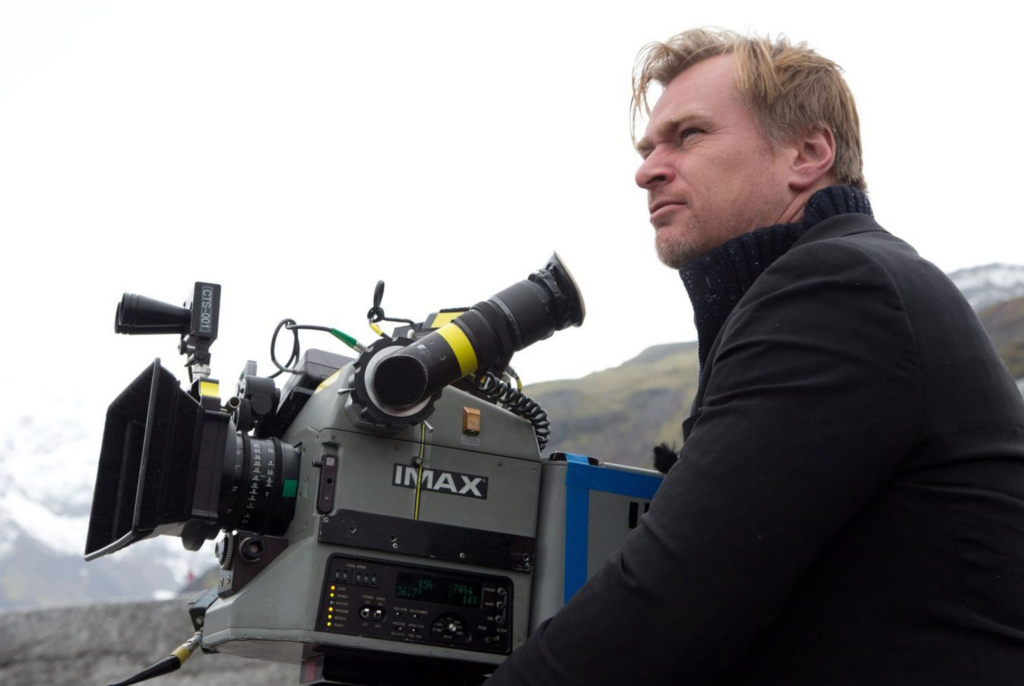
AI is far, far away of reaching Christopher Nolan-level creative mastery.
The people who should probably be the most nervous aren’t the stars at the top of the creative industries. It’s the massive middle class that exists underneath them.
Think about how creative work actually gets made today. Most musicians aren’t Taylor Swift. Most writers aren’t Stephen King. Most filmmakers aren’t Christopher Nolan. The vast majority of creative workers make a living doing the stuff in the middle — writing marketing copy, designing logos, editing videos, creating stock music, drafting articles like this one… you get the point.
This middle is where AI is the most useful — not creating Stephen King-level prose. Think about it: if a company was paying someone $500 to write a generic SEO blog post and now ChatGPT can produce something 70% as good in 30 seconds, what do you think that company is going to do?
Welp, apply that same logic to other middle-level creative outputs. Stock photography sites. Super simple video editing. Canva-level design. The AI technology doesn’t need to be perfect. It just needs to be good enough to make a business owner question the bill.
We’ve seen this movie before, by the way. The internet didn’t kill journalism, but it absolutely destroyed local newspapers. Streaming didn’t kill music, but it gutted record stores. Technology tends to eliminate the middle layers first because those are the easiest parts to replace. The people creating truly great work can and will survive.
Can an AI crowd thousands of people into an arena like a top-notch music artist? Can AI characters convey emotion with facial movements only à la an actor? Can AI erupt a comedy show theater into laughter?
The answer is a resounding no to all of them.
That’s why we don’t think AI is coming for creativity itself. Humans are still going to write songs, make movies, record podcasts, and create art. It’s just a human instinct to express oneself this way.
The bigger question is whether all the supporting jobs that grew up around those industries remain as valuable as they once were (our money says hell no). If creating something becomes dramatically cheaper, then a lot of the businesses built around helping people create may discover they’re no longer as essential as they thought.