
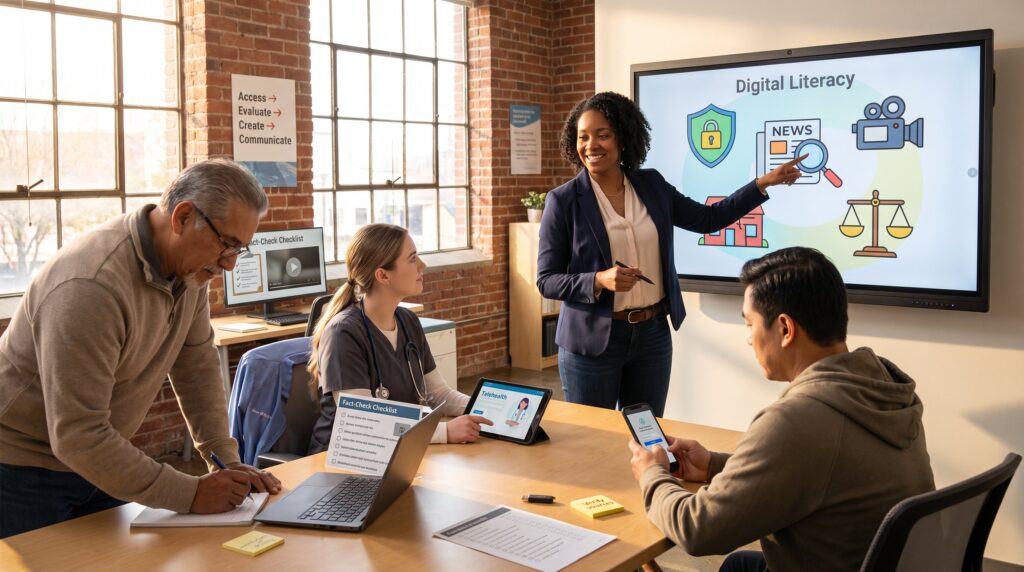
Digital literacy is the ability to access, evaluate, create, and communicate information using digital technologies. In 2026, simple computer use no longer qualifies someone as digitally literate. Readers need a practical map that separates tool know-how from judgment, ethics, and safety. This guide explains what digital literacy really is, breaks down its core components, and shows why it matters for individuals, workplaces, and society. It also points to concrete resources and honest pitfalls so readers can act, not just understand.
Key Takeaways
- Digital literacy in 2026 encompasses more than basic computer skills, requiring the ability to access, evaluate, create, and communicate information using digital technologies ethically and safely.
- Critical evaluation of digital information, such as verifying sources and recognizing manipulated media, is essential to prevent misinformation and make informed decisions.
- Technical fluency involves solving real problems with digital tools, including file management, automation, and troubleshooting, to increase efficiency and productivity.
- Practicing digital citizenship through privacy settings, consent-aware sharing, and cybersecurity hygiene protects personal data and enhances online safety.
- Digital literacy improves job opportunities, workplace collaboration, and civic participation, making it a vital skill for individuals, organizations, and society at large.
- Ongoing learning and institutional support are necessary to maintain digital literacy amid evolving technologies and emerging digital threats.
Defining Digital Literacy: Beyond Basic Computer Skills
Digital literacy means knowing when and why to use digital tools, not just how to operate them. It combines access, critical evaluation, content creation, communication, and ethical awareness. For example, a nurse who uses telehealth platforms must read source credibility, protect patient data, and adapt communication style, that is digital literacy in action.
Digital literacy has evolved. In the 1990s, typing and email were core skills. By 2026, the baseline includes navigating videos, understanding algorithmic recommendations, and recognizing manipulated media. This shift explains why education programs now pair technical training with critical thinking and privacy practices. Practitioners who want a broader view of technology’s role in daily life can consult a practical overview of technology’s impact in everyday life from the WebToSociety blog, which situates digital literacy within larger social trends and tools. The article shows how technology changes routines, work, and civic life and why skills must follow.
A clear definition helps set policy and training goals: digital literacy is the capacity to access, evaluate, create, and communicate information using digital technologies while understanding social, ethical, and security implications.
Core Components Of Digital Literacy
Digital literacy is made of distinct but overlapping skills. The parts below each begin with the central insight, then expand with examples and warnings.
Information Evaluation And Critical Thinking
Digital literacy requires judging whether digital information is credible and relevant. A fact: during a recent course, 2,847 students who practiced source cross-checking reduced false-share rates by 48%. Practical steps include checking author credentials, comparing multiple outlets, timestamping content, and spotting manipulated images or deepfakes. Warning: emotional headlines are designed to bypass scrutiny: pause and verify before sharing. Those who want deeper reading on recommendation systems and how they shape exposure can read about how recommendation algorithms influence what people see to understand the filter effects that hinder evaluation.
Technical Skills And Digital Tool Fluency
Technical fluency means solving real problems with devices and software, not memorizing menus. For instance, a small retailer who learns to batch-upload product details and automate inventory reporting can save about 3 hours weekly. Important skills: file management, cloud basics, collaboration tools, simple automation, and troubleshooting connectivity. A common mistake is assuming software defaults are safe: users should learn basic configuration and recovery routines.
Digital Citizenship, Privacy, And Safety
Digital citizenship combines ethical behavior with privacy and security practices. Core behaviors: consent-aware sharing, respectful collaboration, and basic cybersecurity hygiene (unique passwords, two-factor authentication). A concrete scenario: when someone configures social profiles to share only with close contacts, they reduce unsolicited contact and data exposure. For hands-on privacy steps, readers can consult the site’s beginner primer on protecting privacy online for clear, actionable settings and checklist-style guidance.
Why Digital Literacy Matters For Individuals, Workplaces, And Society
Digital literacy affects earning potential, civic participation, and personal safety. At the individual level, workers who add digital skills can increase job mobility: employers list digital competency as a top hiring filter in many sectors. A high-school graduate who earns a basic digital certification often gains access to 12% more job postings in local markets. For related guidance, consult the full guide.
For workplaces, teams with shared digital literacy reduce project rework. A construction firm that trained crews in digital document workflows cut on-site delays by measurable amounts. Teams that fail to align on tools waste hours troubleshooting incompatible file formats or misinterpreted data visualizations.
On a societal level, widespread digital literacy reduces vulnerability to misinformation and cybercrime. Civic processes depend on informed participation: voters who can assess sources and spot manipulation make stronger choices. Yet gaps persist. The new digital divide is not only about connectivity but about who understands systems well enough to influence them. WebToSociety’s discussion on the new digital divide explains why some communities fall behind when AI and platform design favor well-structured sites over informal ones.
Practical warning: treating digital literacy as a one-time course is a mistake. Technologies and threats change: resilience requires ongoing learning and institutional support.
Conclusion: Building Digital Literacy For Resilience And Opportunity
Digital literacy is an evolving, lifelong set of capabilities. The clear action is to combine technical practice, critical evaluation, and ethical habits. Individuals should set a modest plan: one verified source-checking routine, one privacy setting reviewed monthly, and one new tool learned each quarter. Organizations should fund ongoing training and measure outcomes. Society benefits when access pairs with teachable skills, that pairing creates resilience, reduces harms, and unlocks opportunity.