
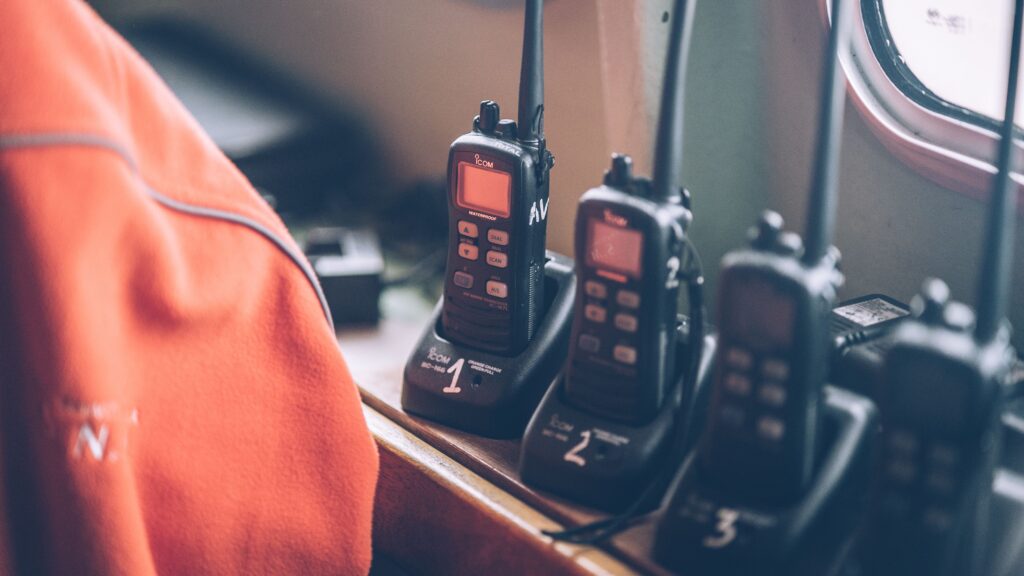
In the modern team, more ways are available to talk than ever. Mobile phones, messaging apps, cloud dashboards, video calls, project tools are available to them. If you have time to type, read, wait, and look at a screen, those channels are great. They’re not as effective when you have people spread out at a large site and no time to answer in seconds. That is why long-range two-way radios are required for so many businesses.
They don’t want to replace phones or software. They provide a new type of communication: short, direct, group-based messages that help people move, respond, and coordinate without delay. And for warehouses, farms, event teams, construction sites, schools, security teams, hotels, and transport operations, that speed makes daily work calmer and safer. A supervisor can reach multiple people at once.
A security lead can move staff without sending out individual calls. A site manager can stop a delivery before it reaches a wrong place. The technology is familiar, but the reason companies use it has not disappeared. When everyone is moving across space, instant voice is still solving problems apps tend to make slower.
Why Phones Are Not Always Enough
Mobile phones are useful, but not for every work site. They will be used. A call has to be connected. A message has to be noticed. A group chat can get cluttered with updates that were useful ten minutes ago and now are no longer relevant. It is in busy places that delay matters. Two-way radios are used to have quick operational talk.
Press the button, speak clearly, and get the signal out. No need to unlock a screen, search for a contact, wait for someone to answer, or hope a notification gets seen in time. That difference is real and evident in day-to-day work. At an outdoor event, staff may be needed from a different area to deal with crowd issues near one entrance. In a warehouse, a loading bay may have to halt until a forklift can clear the path. A team member might have to help in a field where mobile reception is low on a farm. A delivery might be redirected on a construction site before blocking access.
Where Long-Range Radios Make The Most Sense
A small shop or office may not need radio communication. The case becomes stronger when staff are moving across distance, working around noise, or handling tasks that change quickly.
| Workplace | Why radios can help | Common use |
| Warehouses | Teams can speak across aisles, yards, and loading areas. | Coordinating deliveries and stock movement. |
| Events | Staff can manage gates, queues, security, and suppliers. | Moving help to the right area quickly. |
| Construction sites | Supervisors can reach crews without relying on mobile calls. | Managing access, safety updates, and deliveries. |
| Farms and estates | Workers may be spread across open land or buildings. | Contacting teams across fields, yards, or storage areas. |
| Hotels and venues | Front desk, maintenance, and security can stay connected. | Handling guest issues and urgent support. |
| Security teams | Group messages can reach several staff at once. | Responding to incidents or changing patrol coverage. |
UHF, VHF, And The Problem Of Range
In comparison between businesses, range is often the first question you are likely to be asked. The answer depends on the site. Buildings, steel, concrete, hills, trees, weather, and open space all affect how far a radio signal travels. UHF radios are widely used in buildings because they handle walls and indoor spaces better. VHF radio is most often used in open areas on the open Earth and also in less crowded areas to get the signal.
A warehouse and a farm may need long-distance communication, but they may not require the same type of radio. Thus, buying radios simply by virtue of distance claims can lead to disappointment. A well-performing device that operates well on open land may behave differently inside a multi-level building. A business ought to think about where the radios would be used: inside, outside, across yards, around vehicles, near steel structures, or over wide rural areas.
For UK companies comparing licensed options, long range two way radios UK can be a useful starting point because the choice usually depends on coverage needs, licensing, work environment, and whether UHF or VHF is better suited to the site.
Licensed Radios And Why Businesses Choose Them
License-free radios may be sufficient for small teams in small areas. They are inexpensive to buy and use and can be used for lighter work. Larger sites need more control, better range and less interference from the other users nearby. And licensed radios are a good thing to consider. With licensed radios, a business applies for permission to use a specific frequency. That is one step, but the team may also have a clean communication setup because radios are a part of everything that is happening, not just a matter of convenience. Radio traffic is a part of how work happens for a security company, event operator, construction company, or logistics yard. If the channel is clogged or the supply is unreliable, the business feels it quickly. Licensed radios can help teams who need reliable contact in a larger area have a more controlled system.
What To Check Before Choosing Long-Range Radios
The best radio setup depends on the team, the site, and the way people work during a normal shift. Before buying, a business should look at a few practical details:
- Working area. A single building, a warehouse yard, a rural estate, and an event ground all create different range needs.
- Indoor or outdoor use. Concrete, steel, thick walls, and several floors can affect radio performance differently than open fields or outdoor sites.
- Number of users. A small team may only need one shared channel, while a larger operation may need separate channels for supervisors, security, operations, and maintenance.
- Shift length. Battery life matters when radios are used across a full working day, especially when charging between tasks is not realistic.
- Accessories. Security, hospitality, and event teams may need earpieces or headsets when hands-free or discreet communication is important.
- Safety features. Panic buttons, lone-worker alerts, and man-down functions can be useful for higher-risk jobs or staff working away from the main team.
A Practical Tool For Real-World Work
Businesses don’t use long-range two-way radios because they’re old-fashioned. They use them because some work still happens within yards, fields, venues, buildings, and job sites where voice communication is quicker than it is done with an app. Phones, software, and dashboards are all there. Radios fill the gap between people that are on the move and teams that are too spread out to do the work face-to-face.
For companies with physical operations, that gap can harm safety, speed, customer service, and daily coordination. A good radio setup is practical, simple to understand, and based on how the team already works. When the right people hear the right message at the right time, the whole operation goes forward with less delay.